





 TEL:13615481234


What are the precautions for using a single beam crane
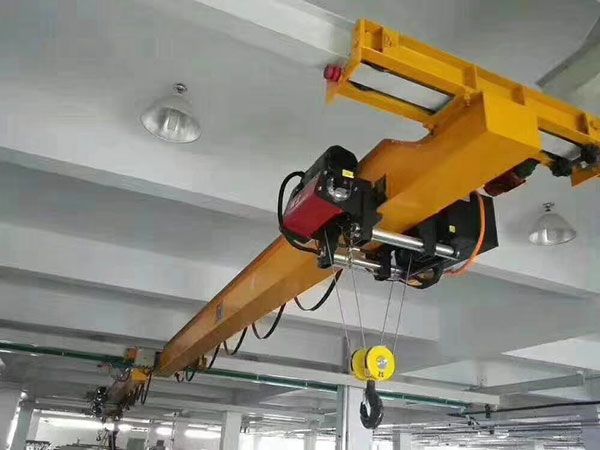
As a commonly used material handling equipment in industrial production, the safe operation of single beam cranes is crucial. The following are the key precautions for the use of single beam cranes compiled by Shandong single beam crane manufacturers, covering aspects such as operation, maintenance, safety, and environmental adaptability:
1、 Pre operation inspection
Equipment status confirmation
Appearance inspection: Check for cracks, deformations, or severe wear on structural components such as main beams, end beams, tracks, and wheels.
Electrical system: Confirm that the cables, junction boxes, and control buttons are undamaged, well grounded, and avoid the risk of electrical leakage.
Limit device: Test whether the up/down limit and the travel limit of the large/small vehicle are sensitive and reliable to prevent overtravel operation.
Braking system: Check whether the brake (such as electromagnetic brake, hydraulic brake) responds quickly and whether the braking distance meets the requirements.
Wire rope and lifting equipment: Check whether the wire rope is broken, corroded or deformed, and whether the lifting equipment such as hooks and rings are intact and free of cracks.
Environmental adaptability inspection
Track flatness: Ensure that the track is free of obstacles, oil stains, or water accumulation, and avoid crane shaking or derailment during operation.
Space limitation: Confirm that there are no obstacles such as high-voltage lines or pipelines in the work area to avoid collision risks.
Ventilation and lighting: When used in a closed or high-temperature environment, good ventilation must be ensured; Night work requires sufficient lighting.
2、 Operating standards
load management
Overloading is strictly prohibited: Operate according to the rated lifting capacity label, and use beyond the load to avoid deformation or breakage of the main beam.
Uniformly distributed load: When lifting long materials, it is necessary to adjust the position of the lifting point to prevent overturning caused by unbalanced load.
Avoid impact loads: When lifting or lowering, the operation should be smooth, and sudden lifting and stopping are prohibited to reduce the impact on the structure.
operation control
Low speed start: Start at low speed first, confirm that there are no abnormalities, and then accelerate to normal speed.
Synchronous operation: The crane, trolley, and lifting mechanism need to coordinate and cooperate to avoid sharp turns or sudden changes in direction.
Prohibition of diagonal pulling: Keep the steel wire rope vertical during lifting, and prohibit diagonal pulling and lifting to prevent the steel wire rope from falling out of the groove or breaking.
personnel security
Special personnel operation: Non professionals are not allowed to operate the crane. Operators must hold a certificate and be familiar with the equipment performance.
Signal communication: When multiple people work together, clear command signals should be provided through gestures, walkie talkies, etc. to avoid misoperation.
Do not stay below: During the lifting process, personnel are strictly prohibited from standing or passing through the area below, and warning lines or signs should be set up.
3、 Maintenance and upkeep
routine maintenance
Cleaning and lubrication: Regularly clean the track, wheels, and gearbox of debris, and add lubricating oil to bearings, gears, and other parts.
Fastener inspection: Check whether the bolts and nuts are loose and tighten them in a timely manner to prevent structural looseness.
Electrical component dust removal: Clean the dust inside the control cabinet with compressed air to avoid poor contact or short circuits.
Regular maintenance
Structural testing: Conduct stress testing on the main beam every six months or one year to check for cracks in the welds (non-destructive testing techniques can be used).
Brake adjustment: Adjust the brake clearance every 3-6 months according to the frequency of use to ensure that the braking torque meets the requirements.
Wire rope replacement: When the number of broken wires in the wire rope reaches the scrap standard (as specified in GB/T 5972), it needs to be replaced immediately.
Reserve of vulnerable parts
Reserve commonly used vulnerable parts in advance (such as wire ropes, brake pads, contactor contacts) to shorten downtime due to malfunctions.
| Previous:What are the differences between single beam cranes and double beam cranes? | Next:What are the characteristics and advantages of double beam cranes |



 Home
Home
 Tel
Tel
 Product