





 TEL:13615481234


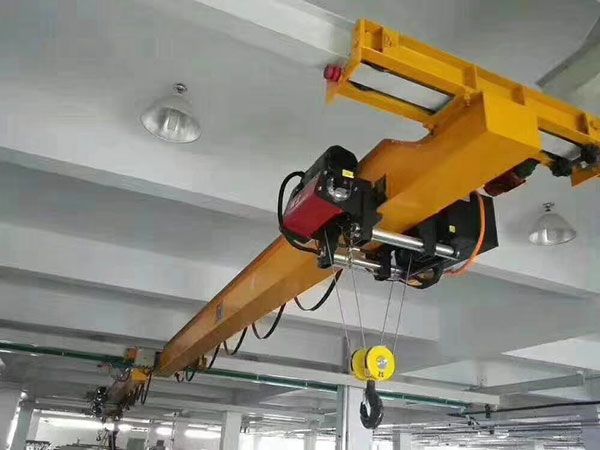
For an electric single beam crane, its operation relies on the application of any component. Take the sliding wire as an example. Without its current transmission, it is difficult for the equipment to operate. Due to the different types of contact and sliding wires used in different occasions, today the Shandong single beam crane manufacturer will introduce the use of various types of contact and sliding wires.
1、 Single touch sliding line
The single Ji energy-saving combination sliding wire is currently a widely used sliding wire for bridge cranes in the market. The conductor material is conductive aluminum or copper, among which aluminum sliding contact wire has a high market share. Its product has good conductivity, high cost-effectiveness, reliability, and a modular design that is easy to install and maintain. It has a wide range of applications and can be used in various indoor and outdoor environments. The current range is available from 200A-2000A, which can meet the product requirements of different devices.
2、 Tube type multi touch sliding line
The tube type sliding wire embeds the conductor in the PVC shell, which is easy and simple to install. It uses purple copper as the sliding conductor of the bridge crane, with good conductivity. However, due to the limitation of the inner groove of the shell, it is more suitable for low-power mobile equipment.
3、 High temperature rigid body contact slip line
The high-temperature rigid body crane contact sliding wire is composed of copper conductors and steel structural skeleton or aluminum profiles. It has high mechanical strength and good rigidity, and can withstand strong impact currents. Copper is used as the conductor, which can carry currents of over 3000A. The rigid body bridge crane contact sliding wire has no shell as protection, a large heat dissipation area, low temperature rise, and long service life. Due to the special material, it can be applied in high temperature, high pressure, high humidity, strong corrosion, and high dust environments, such as steelmaking, metallurgy, chemical industry, ports and other industries.
| Previous:Classification of gantry cranes | Next:What are the characteristics and advantages of double beam cranes |



 Home
Home
 Tel
Tel
 Product