





 TEL:13615481234


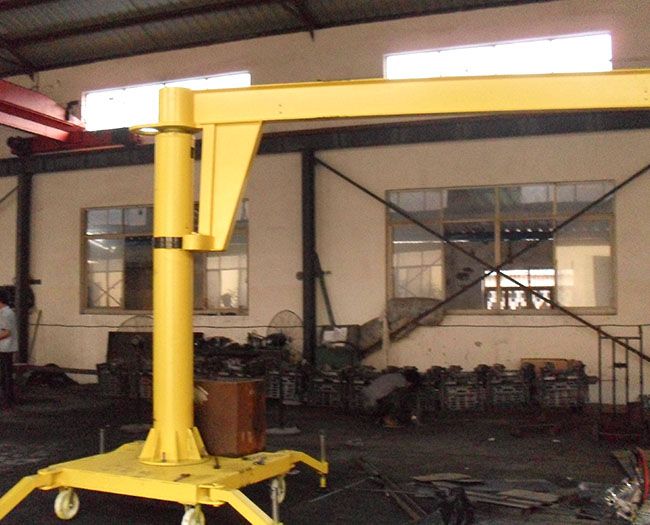
Fixed column jib crane (also known as column jib crane, standing column jib crane, column type jib crane, column type jib crane, fixed column jib crane, fixed column jib crane, etc.) is a new generation of lightweight lifting equipment designed to adapt to modern production. It has the advantages of novel structure, rationality, simplicity, easy operation and use, flexible rotation, and large working space, making it an energy-saving and practical material lifting equipment. It can be widely used for lifting heavy objects on production lines, assembly lines, and machine tools in factories, mines, workshops, warehouses, docks, and other occasions.
The fixed column slewing arm crane consists of a column device, a slewing device, a slewing arm device, and a chain electric hoist. It mainly includes an upper column, a lower column, a main beam, a main beam pull rod, a lifting mechanism (chain electric hoist), a slewing mechanism, an electrical system, a climbing ladder, and a maintenance platform. The lower end of the column is fixed on the concrete foundation, and the rotating arm can rotate according to user needs. The rotating part is divided into manual rotation and electric rotation. The electric chain hoist is installed on the rotating arm track for lifting heavy objects.
Characteristics of fixed column cantilever crane:
The fixed column jib crane, combined with a highly reliable electric chain hoist, is particularly suitable for short distance, frequent use, and intensive lifting operations. It has the characteristics of energy saving, labor-saving, small footprint, and easy operation and maintenance. The electric chain hoist has the functions of lifting and running back and forth on the crossbeam. The rotating arm beam can be driven by the reducer on the rotating device to rotate the roller, and the electrical control box is installed on the chain hoist.
The standard product operation is achieved through the flashlight door button. The flashlight door has eight buttons that control fast rise, fast fall, slow rise, slow fall, left and right rotation, and the horizontal forward and backward movement of the hoist car.
| Previous:What are the advantages of a single beam crane? | Next:What are the characteristics and advantages of double beam cranes |



 Home
Home
 Tel
Tel
 Product